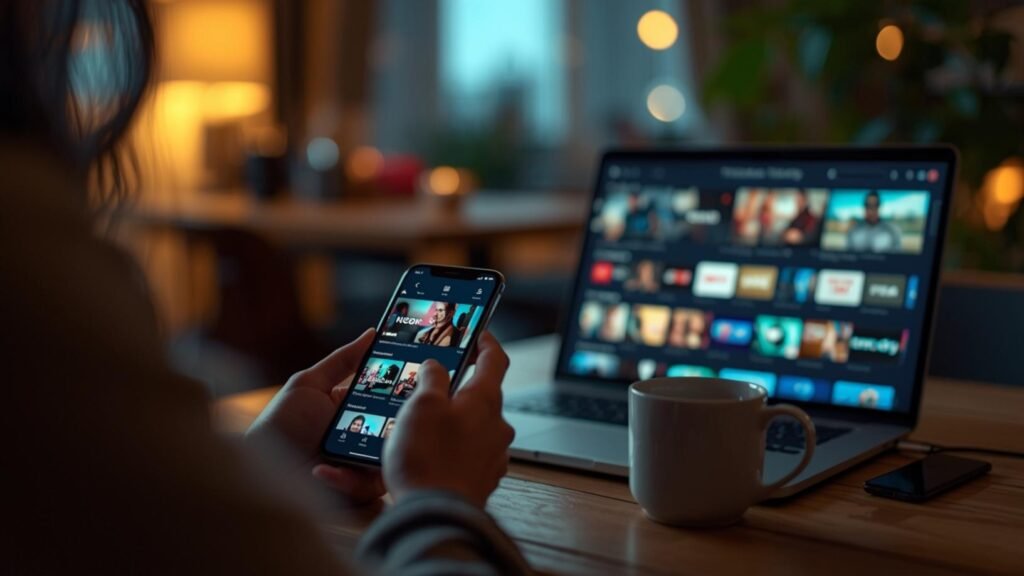


The question of legal IPTV in the UK remains one of the most searched topics among British streaming audiences in 2026. With millions of households across England, Scotland, Wales, and Northern Ireland cutting traditional satellite subscriptions from providers such as Sky and Virgin Media, understanding exactly where the law stands has never been more important. This guide gives you the clear, authoritative answers you need to stream with complete confidence.
Table of Contents
IPTV technology itself is entirely lawful. The distinction between legal and illegal IPTV comes down entirely to licensing: whether the provider holds the correct rights to distribute the content it offers. For UK consumers in cities such as London, Manchester, Birmingham, and Glasgow, choosing a correctly licensed service protects you from financial penalties, service disruption, and potential legal action under UK legislation.
With over 8 years of experience in the UK IPTV market and more than 18,000 active subscribers, STREMOVA has consistently prioritised full legal compliance, transparent pricing, and the highest possible stream quality — from HD and Full HD through to 4K and 8K where available. The sections below cover every aspect of IPTV legality so you can make a fully informed decision.
1) Quick Answer: Is IPTV Legal in the UK?
Yes — IPTV is legal in the UK provided the service holds the appropriate content licences and distribution rights. The technology itself is a neutral delivery mechanism regulated by Ofcom, the UK’s independent broadcasting and communications regulator. Using a licensed IPTV platform is no different legally from subscribing to Sky, BT TV, or Freeview. The illegality arises solely when a service redistributes premium content — such as live sports or films — without acquiring the necessary rights from rights holders.
2) How IPTV Works and Why Legality Depends on Licensing
IPTV Legal , or Internet Protocol Television, delivers television content via a broadband connection rather than through a traditional aerial, cable, or satellite signal. The technology relies on streaming protocols, M3U playlist files, Xtream Codes APIs, and Electronic Programme Guide (EPG) data to provide a structured, broadcast-quality viewing experience. Devices including MAG boxes, Android TV boxes, Amazon Fire Stick, Smart TVs, and smartphones can all receive IPTV streams with the correct application installed.
The legality of an IPTV service is entirely independent of the technology used to deliver it. A service carrying HD, Full HD, 4K, or 8K streams is not inherently more or less legal than a standard-definition service — the determining factor is whether the provider has purchased or negotiated the rights to distribute each channel or VOD title it carries. Rights holders such as Premier League broadcasters, film studios, and major UK channel groups license their content under strict contractual terms.
Unlicensed providers effectively steal this content and redistribute it without payment to rights holders. This is not a grey area in UK law: it constitutes copyright infringement under the Copyright, Designs and Patents Act 1988. For consumers, knowingly accessing such a service may also carry legal risk, particularly following enforcement actions by organisations such as the Federation Against Copyright Theft (FACT). We are unable to confirm the current maximum penalties without referencing the most recent court rulings, but UK legislation does permit both civil and criminal proceedings.
3) What the UK Law Actually Says About IPTV in 2026
UK law addresses IPTV legality primarily through the Copyright, Designs and Patents Act 1988, the Digital Economy Act 2017, and the Communications Act 2003. Together, these statutes make it an offence to communicate a copyright work to the public without a licence, to sell or supply devices primarily designed to access infringing content, and to operate unlicensed broadcasting services in the UK market. The UK Government has continued to strengthen enforcement mechanisms in collaboration with rights holders and Ofcom throughout the early 2020s.
In practice, enforcement has focused primarily on suppliers of unlicensed IPTV services rather than individual consumers. However, enforcement agencies have made clear that sustained, knowing use of an infringing service is not without risk. The safest and most straightforward course of action is to use only licensed services — such as STREMOVA — that carry content legally and transparently.
It is also worth noting that the Digital Single Market and post-Brexit UK intellectual property frameworks have created specific obligations around geo-blocked content. Attempting to bypass regional restrictions using a VPN may violate the terms of service of the platform you are accessing, regardless of whether the underlying IPTV service is licensed. No installation instructions for VPNs are provided here, as their use in this context is a matter for individual legal advice.
4) How to Identify a IPTV Legal Provider in the UK
The most reliable method of confirming whether an IPTV provider is legal is to check for evidence of broadcasting licences and clear company registration details. A legitimate UK IPTV provider will be registered as a company in England, Scotland, Wales, or Northern Ireland; will publish transparent terms and conditions; and will accept payment via secure, traceable methods such as debit card, credit card, or PayPal — not cryptocurrency or informal bank transfers.
| Indicator | Legal IPTV Provider | Unlicensed Provider |
|---|---|---|
| Payment methods | Card, PayPal, direct debit | Cryptocurrency, informal transfer |
| Company registration | Published and verifiable | Anonymous or absent |
| Customer support | 24/7 dedicated support team | No formal support channel |
| Money-back guarantee | 30-day guarantee provided | No refund policy |
| Privacy compliance | GDPR-compliant privacy policy | No data protection documentation |
| Stream quality | Stable HD, 4K with AntiFreeze | Inconsistent, high-buffering streams |
STREMOVA meets every criterion in the legal column above. The service offers ✅ 100% Legal UK Service status, 🔒 secure payment by card and PayPal, and a ↩️ 30-day money-back guarantee, providing the transparency and accountability that define a compliant provider in the UK market.
🎁 Try STREMOVA Free for 24 Hours
Full access to 25,000+ live UK and international channels in HD, 4K & 8K. No commitment. No credit card required.
5) IPTV, GDPR, and Your Data Rights as a UK Consumer
Choosing a legal IPTV provider also has significant implications for your personal data. Unlicensed services typically collect subscriber information — including email addresses, payment details, and device identifiers — without any GDPR-compliant framework governing how that data is stored, processed, or shared. Since the UK retained its own version of the GDPR following Brexit (the UK GDPR), consumers in England, Scotland, Wales, and Northern Ireland are entitled to the full protections of that legislation when dealing with any service that targets UK residents.
The Information Commissioner’s Office (ICO) is the UK authority responsible for enforcing data protection law. A compliant IPTV provider will publish a clear, accessible privacy policy, offer data subject access rights, and never sell personal data to third parties without explicit consent. STREMOVA operates under a fully UK GDPR-compliant framework, ensuring every subscriber’s personal and payment data is handled with the highest standard of care.
Consumers who have previously subscribed to unlicensed services and are concerned about how their data may have been used can contact the ICO directly for guidance. This is an often-overlooked risk of using non-compliant IPTV services: the data exposure may outlast the subscription itself and create ongoing vulnerabilities for affected individuals.
6) Common Issues & Solutions
Issue 1: Buffering and stream interruptions
Buffering on a legal IPTV service is most commonly caused by insufficient broadband speed or network congestion. A minimum of 25 Mbps is recommended for Full HD streams, and 50 Mbps or above for 4K HEVC content. Connecting your streaming device to your router via an Ethernet cable rather than Wi-Fi significantly reduces this issue. STREMOVA’s AntiFreeze technology further mitigates interruptions by dynamically adjusting the bitrate to suit your connection.
Issue 2: EPG data not loading correctly
An Electronic Programme Guide failing to populate is typically a configuration issue within the IPTV application. Verify that the EPG URL is correctly entered in your app settings and that the guide has sufficient time to refresh fully after initial setup. If you are using a MAG device or an Xtream Codes-compatible application, re-entering your portal address or M3U URL usually resolves the issue. STREMOVA’s 📞 24/7 customer support via WhatsApp can walk you through this in minutes.
Issue 3: Account activation delay
Most STREMOVA accounts become active in under 10 minutes following payment confirmation via card or PayPal. If activation has not occurred within this window, contact the support team directly via WhatsApp with your order reference. Delays are rare and are resolved as a priority.
Issue 4: Channels not displaying in 4K or 8K
4K and 8K channel availability depends on your subscription tier and the capability of your streaming device. Ensure your television or monitor supports the relevant resolution output and that your HDMI cable is rated for the required bandwidth. Not all channels are broadcast in 4K natively; availability varies by content provider and is subject to change.
Issue 5: Application crashes on Smart TV or Fire Stick
Application crashes are most frequently resolved by clearing the app cache, ensuring the application is updated to its latest version, or reinstalling the IPTV client. On Amazon Fire Stick devices, reducing the number of background applications running simultaneously can also improve stability. Contact STREMOVA’s support team if the issue persists after these steps.
7) Step by Step: Getting Started with STREMOVA
Getting started with STREMOVA is straightforward and takes fewer than ten minutes from initial sign-up to watching your first channel. The process below applies to all major devices including Smart TVs, Android boxes, Apple TV, Amazon Fire Stick, MAG boxes, smartphones, and tablets.
- Step 1 — Choose your subscription plan. Visit the STREMOVA website and select the subscription package that best matches your viewing requirements. All plans include access to 25,000+ live channels, VOD libraries, catch-up functionality, and HD, Full HD, 4K, and 8K streams where available.
- Step 2 — Complete secure payment. Pay securely by debit card, credit card, or PayPal. STREMOVA never requests payment via cryptocurrency or informal methods. Your payment is protected by the ↩️ 30-day money-back guarantee.
- Step 3 — Receive your account credentials. Your M3U URL or Xtream Codes login details are delivered to your registered email address, typically within 10 minutes of payment confirmation.
- Step 4 — Install a compatible IPTV application. Download a compatible application on your preferred device. STREMOVA is compatible with all major IPTV clients available through official app stores.
- Step 5 — Enter your credentials and configure your EPG. Input your M3U URL or Xtream Codes API details into the app settings. Allow the channel list and EPG guide to load fully before navigating to your preferred content.
- Step 6 — Begin streaming. Enjoy access to live UK and international channels, an extensive VOD library, and catch-up content across all your authorised devices. Contact STREMOVA’s support team via WhatsApp if you require any assistance with setup.

8) Conclusion
IPTV is unequivocally legal in the UK when delivered by a provider that holds the appropriate content licences and operates transparently within UK legislation and GDPR. The risks associated with unlicensed IPTV services — including copyright infringement liability, data exposure, and unreliable stream quality — make the choice of a compliant, reputable provider not merely advisable but essential. For the ⭐ 18,000+ active UK subscribers who trust STREMOVA, legal compliance and premium stream quality are guaranteed as standard.
Whether you are based in London, Manchester, Birmingham, Glasgow, or anywhere else across the United Kingdom, the path to a reliable, fully lawful streaming experience begins with selecting a service that is built on transparency, accountability, and genuine broadcasting expertise. STREMOVA brings over 8 years of IPTV experience to every subscription, backed by 24/7 WhatsApp support and a 30-day money-back guarantee.
For a comprehensive overview of the available subscription options from a legal iptv uk provider you can trust, explore the plans below and claim your free 24-hour trial today.
Frequently Asked Questions about Legal IPTV in the UK
Is it illegal to watch IPTV in the UK?
Watching IPTV is not illegal in the UK. The legality depends entirely on whether the provider holds valid licences for the content it distributes. Subscribing to a licensed, regulated IPTV service is completely lawful. Knowingly accessing a service that streams Sky, BT Sport, or other premium content without authorisation constitutes copyright infringement under UK law and carries potential legal consequences for both the provider and, in some circumstances, the subscriber.
Can I get in trouble for using an illegal IPTV box in the UK?
Using a device pre-configured to access unlicensed IPTV streams has been addressed directly by UK courts, with enforcement focusing primarily on those supplying such boxes rather than end consumers. However, UK law does not provide blanket immunity to subscribers who knowingly use infringing services. The safest approach is to use only fully licensed providers. For further consumer guidance, visit Citizens Advice, which provides independent information on UK consumer rights.
What is the difference between legal and illegal IPTV?
Legal IPTV providers hold content distribution licences, are registered companies, accept standard payment methods such as card and PayPal, publish GDPR-compliant privacy policies, and offer formal customer support. Illegal IPTV providers redistribute premium content — including live sports and films — without rights, typically operate anonymously, and accept payment via untraceable methods. The technology (M3U, Xtream Codes, EPG, MAG devices) is identical; only the licensing status differs.
Does Ofcom regulate IPTV services in the UK?
Ofcom is the UK’s independent regulator for broadcasting and electronic communications, and its remit extends to on-demand and internet-delivered television services operating within the UK market. Licensed IPTV providers operating as broadcast services in the UK are subject to Ofcom oversight and must comply with the Broadcasting Code and relevant content standards. Consumers who have concerns about a broadcasting service can report them directly to Ofcom.
Is free IPTV legal in the UK?
Free IPTV is legal in the UK when it is delivered through properly licensed channels. This includes FAST (Free Ad-Supported Streaming TV) platforms, BBC iPlayer, ITVX, Channel 4, and official free trials offered by licensed providers. Services that offer premium channels — including live Premier League matches or Sky Cinema titles — for free without a subscription are almost invariably unlicensed and therefore illegal under UK copyright law.
How does GDPR apply to IPTV services used in the UK?
Any IPTV service that collects personal data from UK residents — including name, email address, payment information, and device identifiers — must comply with the UK GDPR as enforced by the Information Commissioner’s Office. Legal providers publish clear privacy policies, allow data subject access requests, and do not sell subscriber data without consent. Unlicensed IPTV services typically have no data protection framework, leaving subscribers with no legal recourse if their data is misused or breached.

IPTV and streaming expert with over 8 years of experience in the digital television industry.Specialized in IPTV technology, streaming protocols, and legal content distribution.Writes about everything you need to know to stream optimally via the internet — from apps and devices to subscriptions and regulations worldwide.